Spotlight on Luis Rangel DaCosta
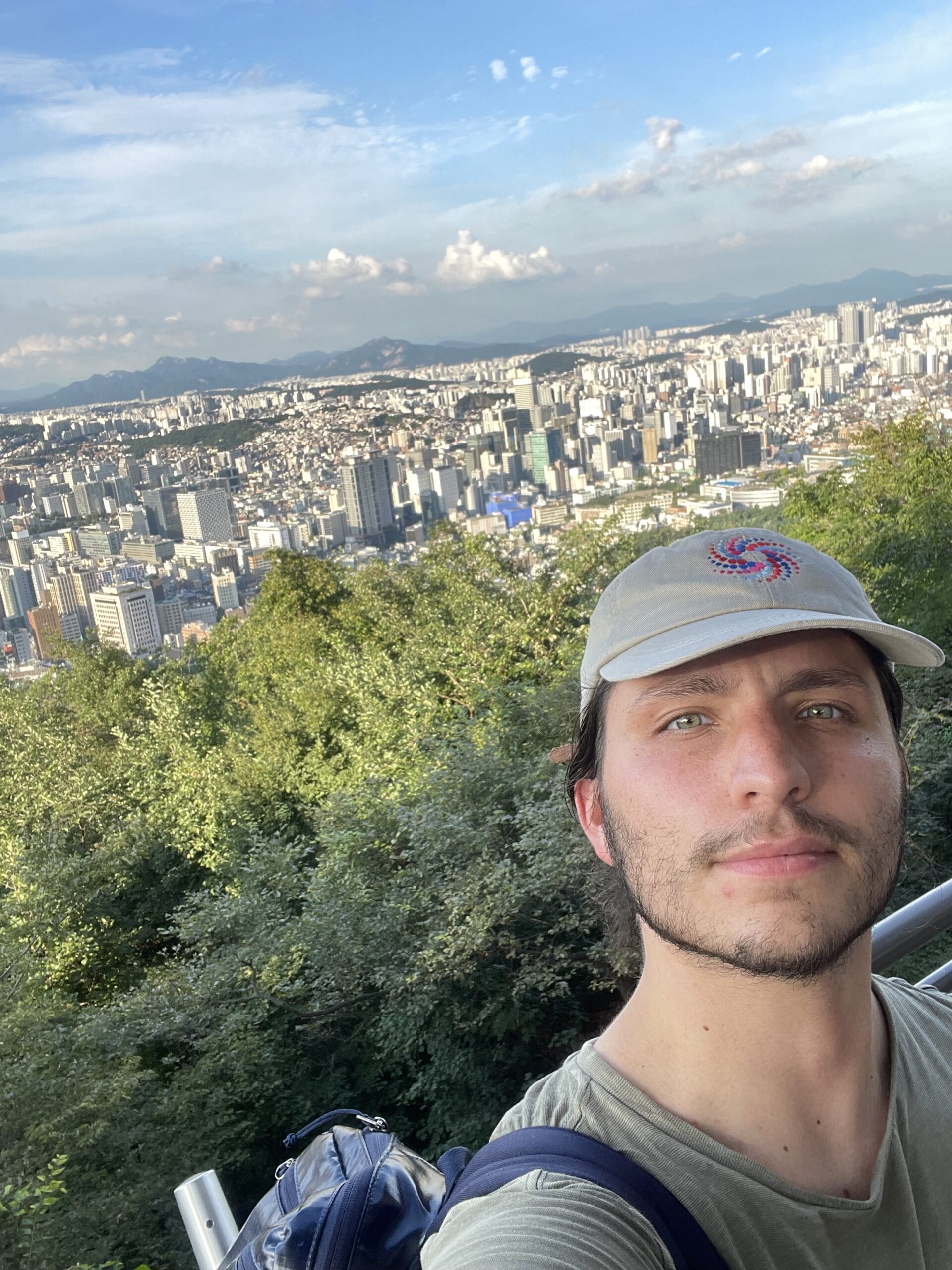
Luis in Seoul for a conference in 2023 - the farthest (geographically) science has taken him!
CRS: Welcome, Luis! Please introduce yourself.
I’m Luis Rangel DaCosta. I was in the Materials Science and Engineering department at UC Berkeley, and started volunteering with CRS in Fall of 2021. I’m still working in the East Bay, but now as a postdoc at the Lawrence Berkeley National Lab (at NERSC, the supercomputing center).
CRS: How did you wind up in your current field? What’s your favorite part of your work?
I came to UC Berkeley from the University of Michigan, where as an undergrad I also was in the materials science and engineering program, alongside studying music performance. I remember getting interested in materials science after taking chemistry classes in high school— I have some fond memories of experiments I had done (in particular, making copper sulfate!)—and feeling like materials science was going to be most similar to what I had liked about chemistry. There were some basic rules, not so many but not always so simple, that we were able to use to explain a lot about how the chemical and physical world worked. I still think materials science is very much like that, though the questions we’ve been asking recently have gotten perhaps a tad more complicated.
CRS: Who or what inspires you to do science outreach, and why?
My own journey through science led me to outreach, but really my education and my career overall has involved many, many mentors going out of their way to take their time and teach me things, and to open up doors to my future (whether I asked them to or not!) I feel very lucky to have had such active hands in helping me do what I wanted to do and learn what I wanted to learn. I try to recognize that as often as I can, and it’s important for me to recognize and acknowledge that I am now in the position to play that role for others. I don’t think it takes much from someone you look up to—especially at that age, in middle school—to make you feel that your interests are valued, that you’re capable of doing big and challenging things, and that you have agency in setting and achieving your goals. I hope I was able to do at least some of that with my BAS work. Also, it was a fun couple of hours every week! It was always a nice break from research.
CRS: How do you think your outreach activities with CRS support greater STEM education?
I think we ask and expect a lot of our school teachers, and we can help them achieve their work. For me, it’s reframing STEM education as a community-centered practice. The Bay Area overall and the East Bay in particular have such a wealth of STEM experience. Why not take advantage of all that we have around? Why wouldn’t the many STEM experts here be able to take some of their time to help teach and share their experience with the next generations of students? I think, if we can take advantage of our community this way, we can make STEM education more robust and more available to more students.
CRS: Describe your favorite part of your science outreach experience.
Getting to know the students is a lot of fun! So many of them have big personalities and big questions (though sometimes hidden behind a bit of shyness) and it was always fun to take time in the (sometimes) quieter moments to just chat and hang out.
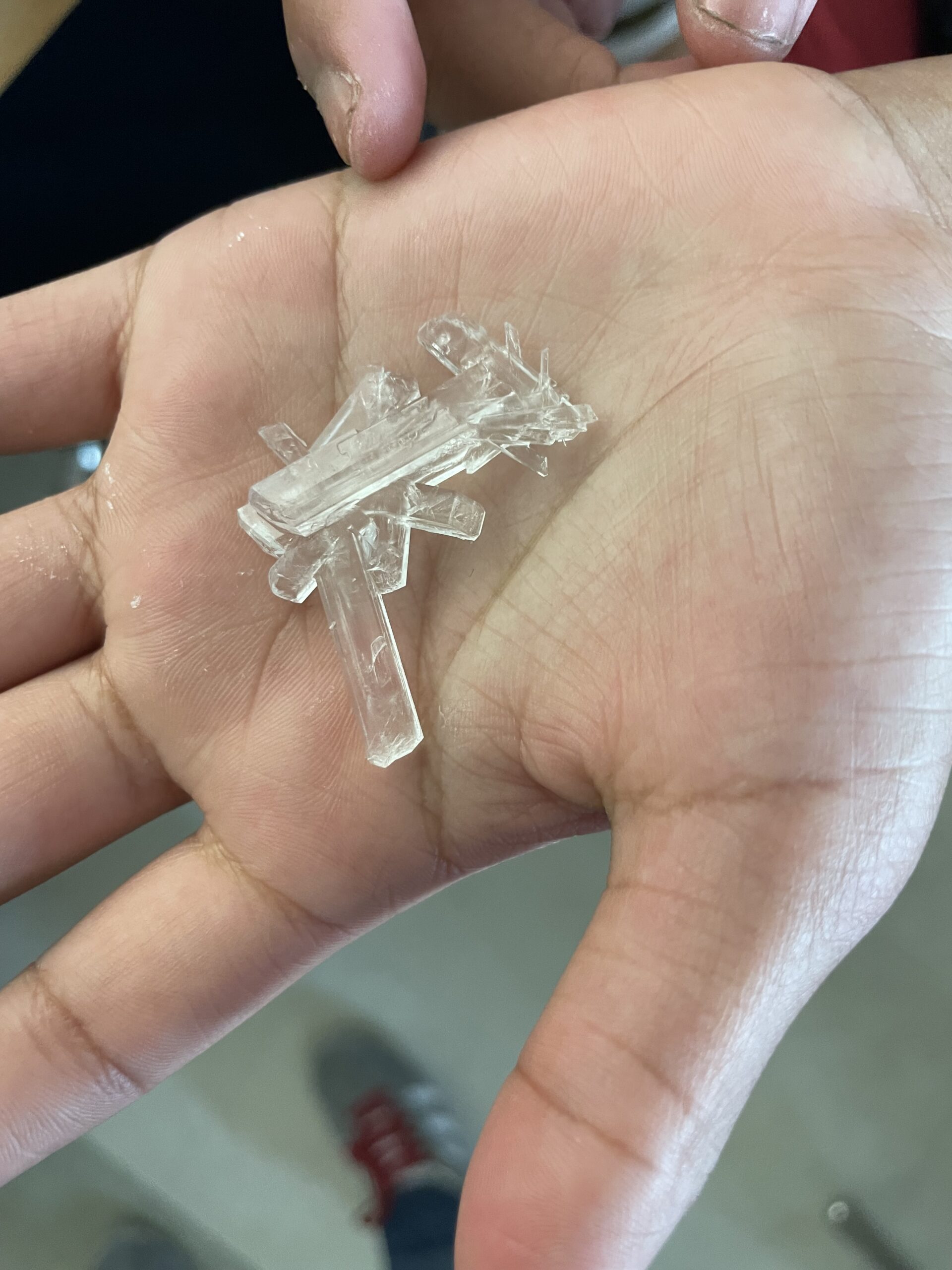
A very successful crystal grown by a student during a Be a Scientist experiment. The student’s excitement reminded Luis of his own chemistry experiences that led him to materials science.