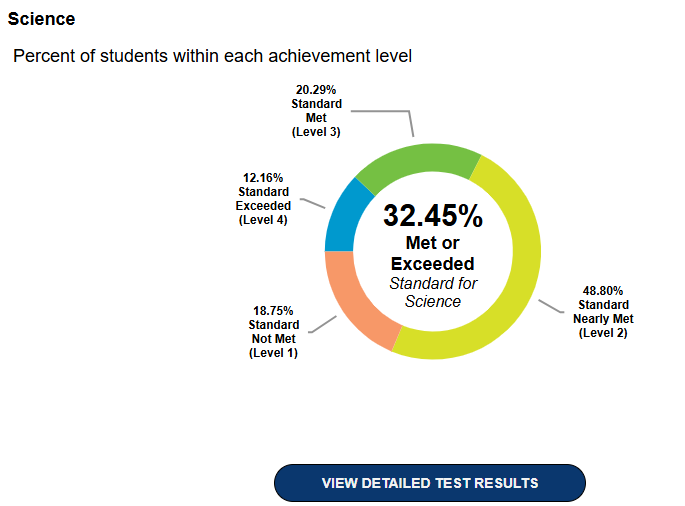
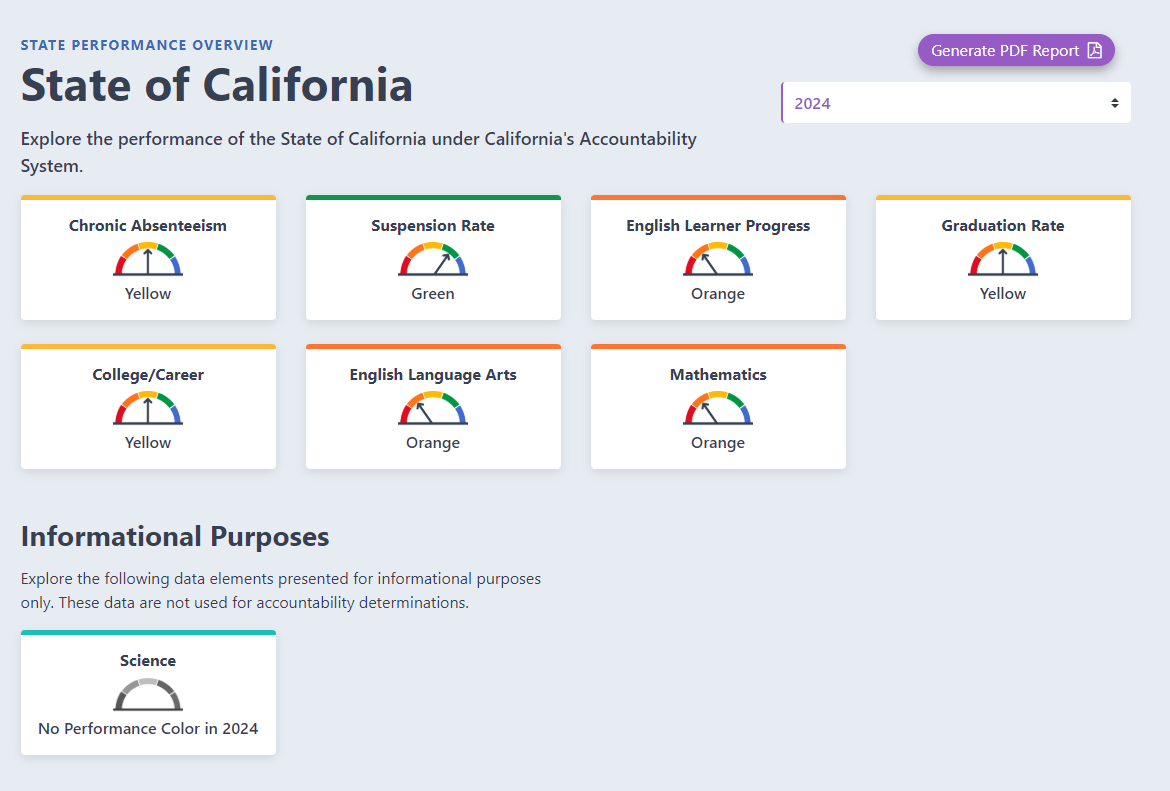
Science is on the California Schools Dashboard!
Science is Now on the California Schools Dashboard!
This means Superintendents, School Boards, Principals – and parents – will be looking more closely at how students in their schools are doing in science. And this provides a great opportunity for teachers, TOSAs, curriculum and professional development leaders to leverage that interest in order to bring about real actions that can strengthen science teaching and learning for students.
Visit the California State Dashboard and check out their short document about what all the measurements mean. CRS Key Recommendations for Supporting Science Teaching and Learning – one pager to print
Science in K-12 (especially elementary) has long been recognized as undersupported.
Calls for action have been many! The most recent include:
- A Blueprint for Action for Equitable K-12 Science Education in California, 2022, (from California Partnership for Math & Science Education; CRS is a signatory in support)
- Call to Action for Science Education, 2021 National Academies of Science, Engineering and Mathematics
- State of Science Education, 2023 Report, Science & Technology Action Committee (nonpartisan, Industry Committee)
Key Recommendations:
Essential Conditions to Support Strong K-5 Science Teaching and Learning
Recommended essential elements for strengthening science teaching and learning, summarized from the three major reports listed above:
-
TIME for science at all grades, starting in Kindergarten
-
At elementary, other expectations (math, ELA, PE) can make it difficult to “find” sufficient minutes for science instruction. Superintendents, Boards and Principals need to articulate expectations for time on science AND provide the structural/system support necessary.
-
Baseline recommendations: 60 minutes per week K-2; 90-120 minutes per week Gr. 3-5
-
Active science learning provides opportunities to INTEGRATE math, ELA, and science practices concurrently, and provide students with engaging opportunities to put emerging math and ELA skills to use
-
-
CURRICULUM that is standards aligned and provides a reasonable pace to accomplish within available time
-
Lessons that include real-world, hands-on experiential learning
-
Systemic support for preparation and management of materials
-
Systemic support in the implementation of curriculum for inclusive, culturally relevant, active investigations (for example, volunteers, aides, teacher coaches/TOSAs)
-
-
TRAINING for teachers
-
Planning time is essential in order for teachers to effectively integrate grade level math, ELA practices into science through writing and discussion prompts, data collection and reasoning/argumentation from evidence, etc.
-
General ed and science specialists – appropriate PD and planning for differentiated needs
-
-
Ongoing support for collaboration and planning
-
Districts/schools can build on internal capacity by supporting peer coaches, teacher leaders
-
Community partners can amplify impact, accelerate implementation, provide sustained support
-
To demonstrate proficiency in 5th grade on California’s science test, elementary students need to be engaged in science learning starting in TK and K!
Moving the Needle: Current State of Science in California
To demonstrate proficiency on the California science test (CAST), students must have regular, ongoing access to science learning every year, starting in Kindergarten. The CAST requires students to think critically and solve problems based on experience engaging in the practices of science and engineering over the course of their entire elementary K-5 experience.
Spring 2024, Science Scores statewide by grade level
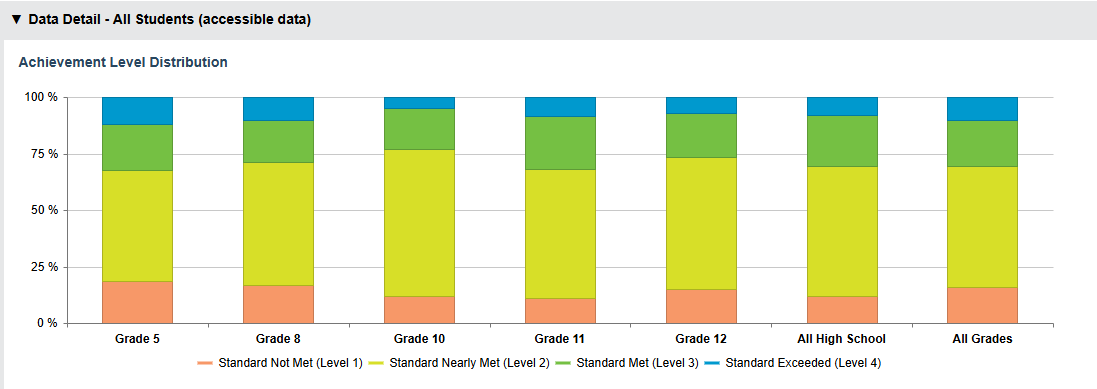
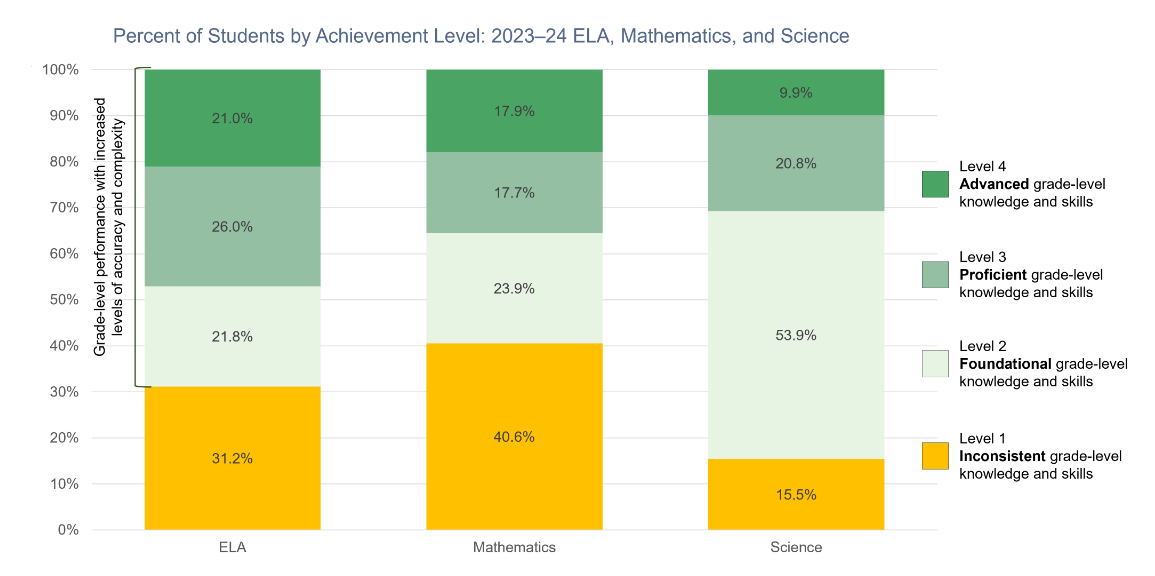
Statewide, 5th Grade Science: